Global Warehouse Management Platform
Scalable UX and UI for mission-critical global warehouse operations across regions, roles, and markets
Validating production-ready experiences that inform product direction and roadmap decisions within a complex, live operational system.
Impact
Reframed product priorities by surfacing cross-regional user needs, uncovering hidden risks, and challenging assumption-driven decisions through large-scale research across global markets.
Role
Senior UX Designer, leading global discovery and validation while delivering end-to-end UX and UI work from early concepts to tested, production-ready designs for complex applications.
Team
Part of a large, global cross-functional product team, collaborating across time zones with product management, engineering, and business stakeholders in a complex enterprise environment.
01 Context and Constraints
Designing within a large-scale operational system
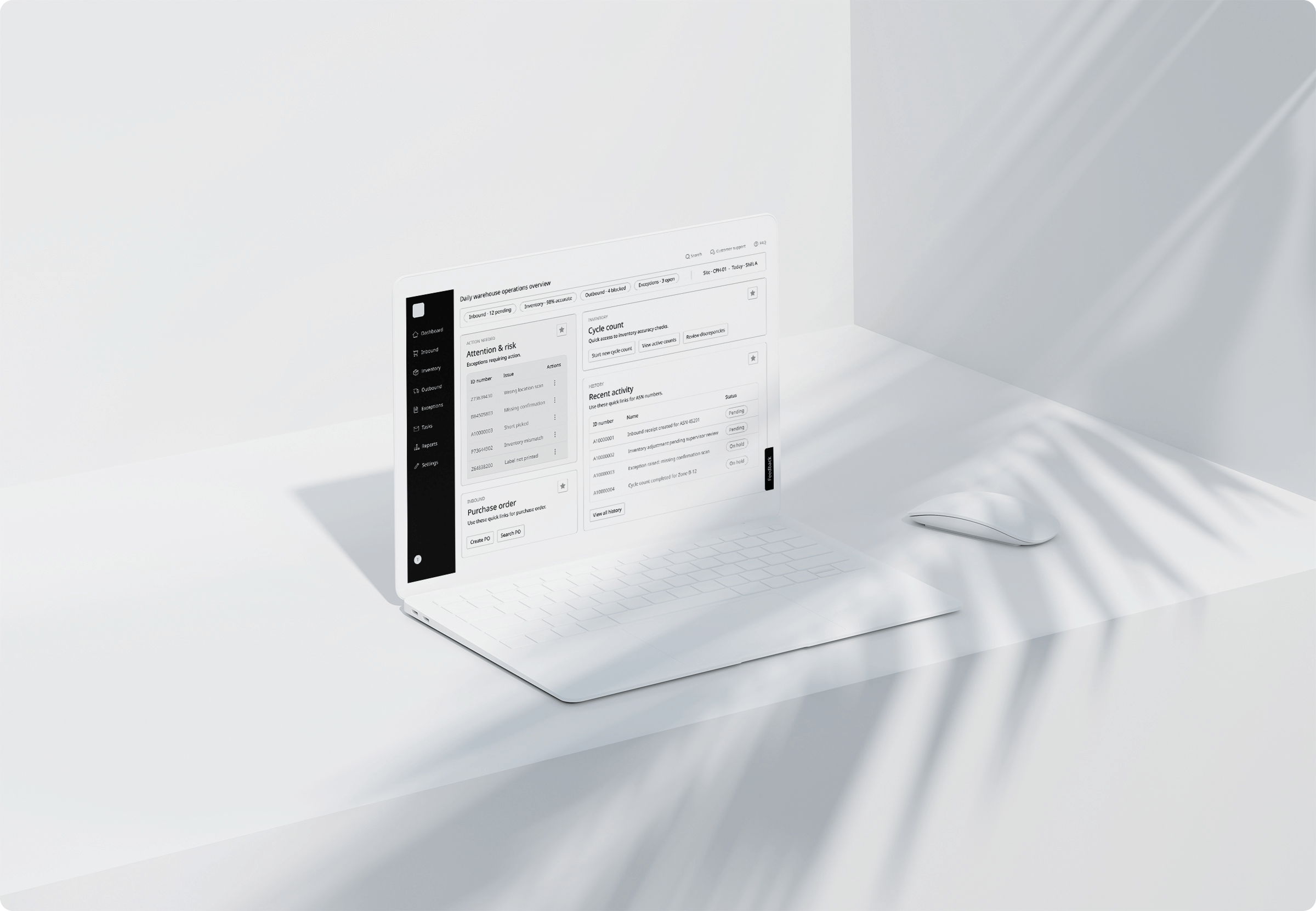
The Global Warehouse Management Platform supports daily operations across regions, customer types, and warehouse setups. The system is used by operators, supervisors, and managers worldwide, each with distinct workflows, responsibilities, and levels of system maturity. The platform is developed within a large, distributed enterprise organization, where design decisions align product, engineering, and business perspectives and are grounded in shared research and evidence. Due to confidentiality and ongoing development, the work shown focuses on approach, decisions, and design direction, rather than detailed interfaces or complete product flows.
02 Research
Building shared understanding across regions and roles
I led global discovery and validation to understand how warehouse operations varied across regions, customer contexts, and levels of system maturity, and to surface patterns not visible from a single market or team. Insights were synthesized across regions to identify shared needs, critical differences, and systemic risks. This research directly supported roadmap decisions in a live, business-critical platform.
Scope
70+ user interviews conducted across multiple global regions
Scale
110+ survey responses collected from diverse user groups worldwide
Timing
Discovery and validation conducted continuously over time
Influence
Insights used to inform priorities and roadmap decisions
03 Decision moment #1
Balancing global consistency with regional operational needs
A central decision was how much consistency a global platform should enforce versus allowing flexibility for local operations. While users shared common goals, workflows varied significantly based on warehouse setup, local processes, customer types, and system maturity. In several contexts, enforcing uniform workflows would have introduced friction or led to workarounds in daily operations. The direction shifted toward a hybrid approach. Rather than fully standardizing workflows, design focused on defining shared patterns and principles while allowing variation where local differences were operationally critical. This reduced operational risk and enabled the platform to scale without disrupting established ways of working.
Operational realities shaping the platform
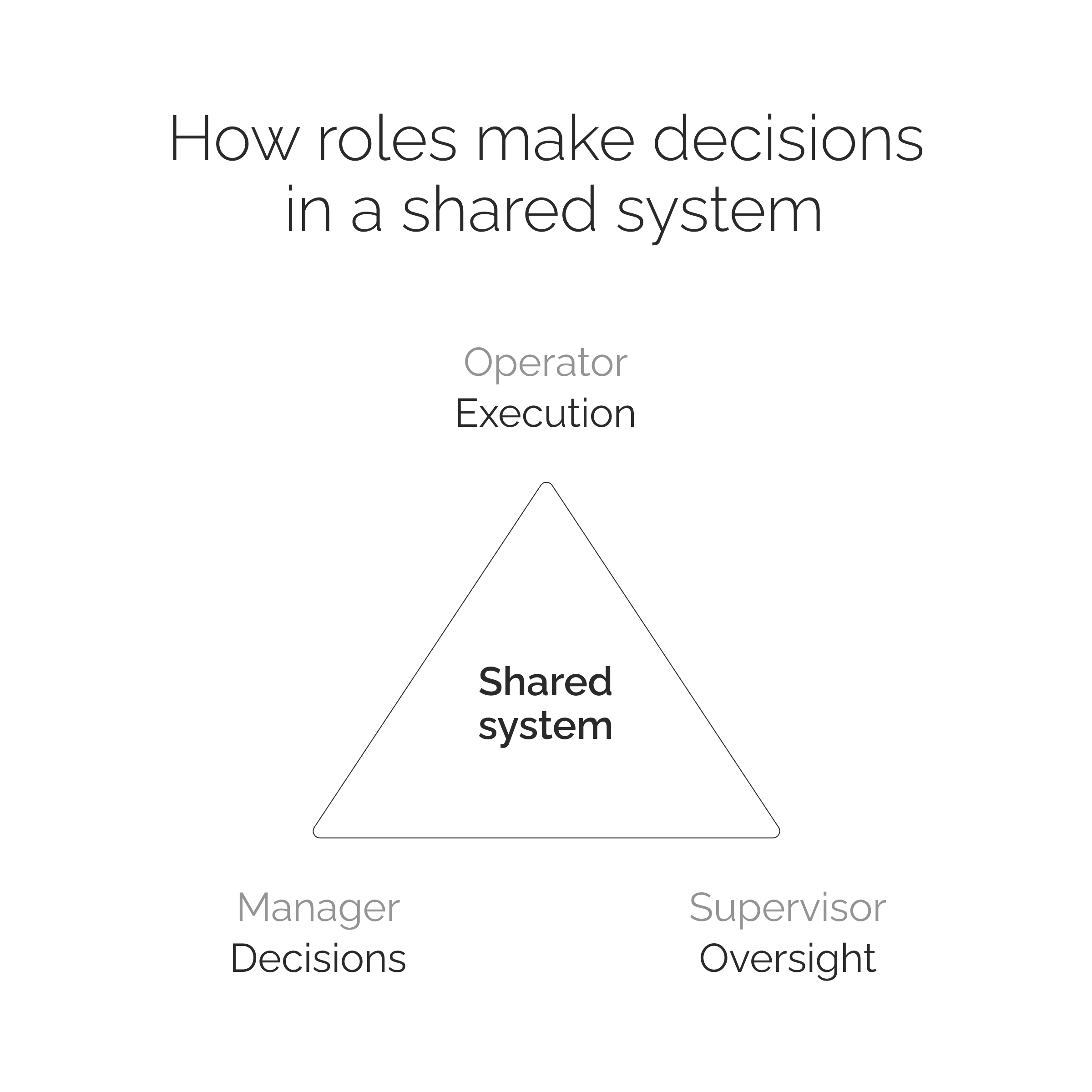
Roles
Operators, supervisors, and managers working in the same system.
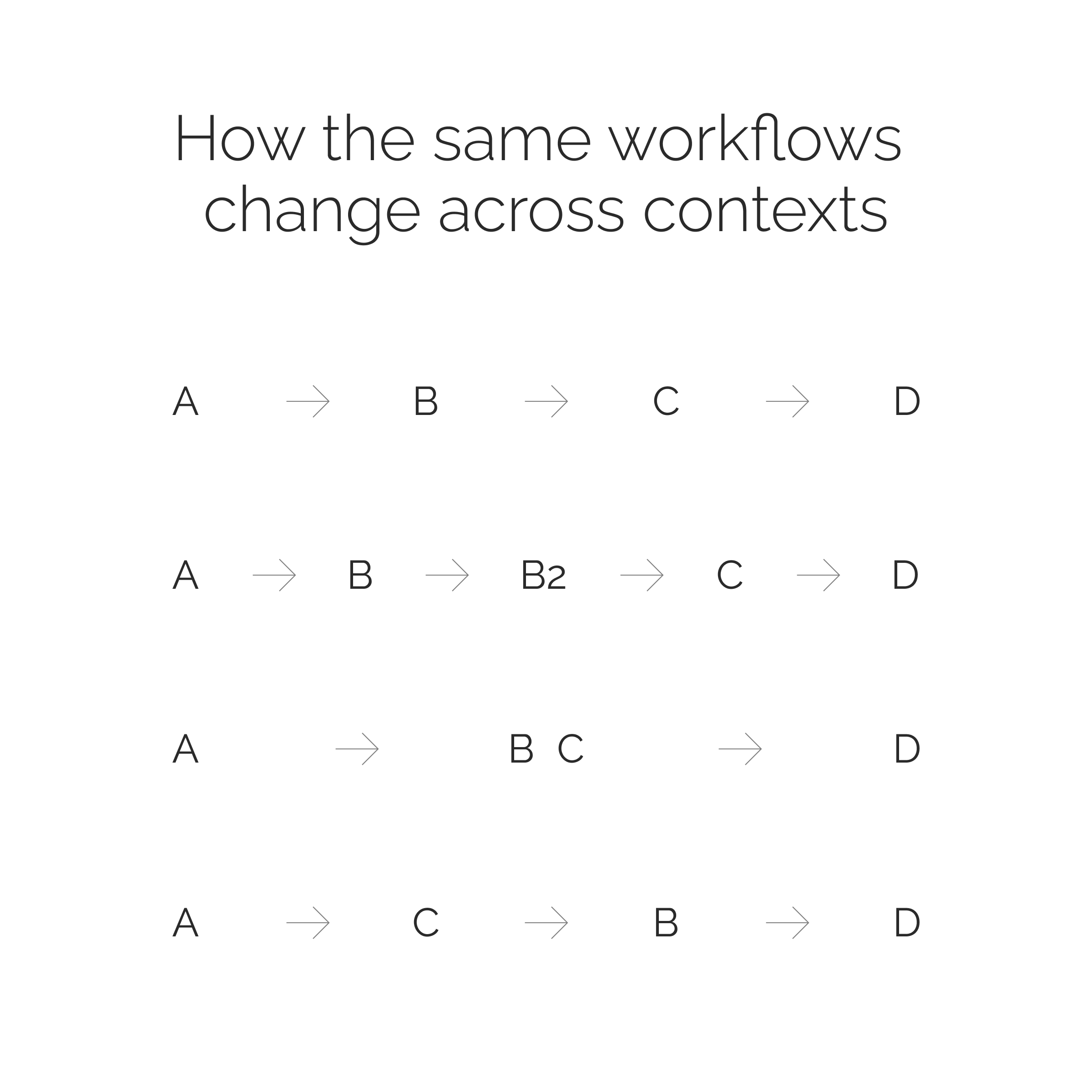
Variability
Workflows changing across warehouse setups and local processes.
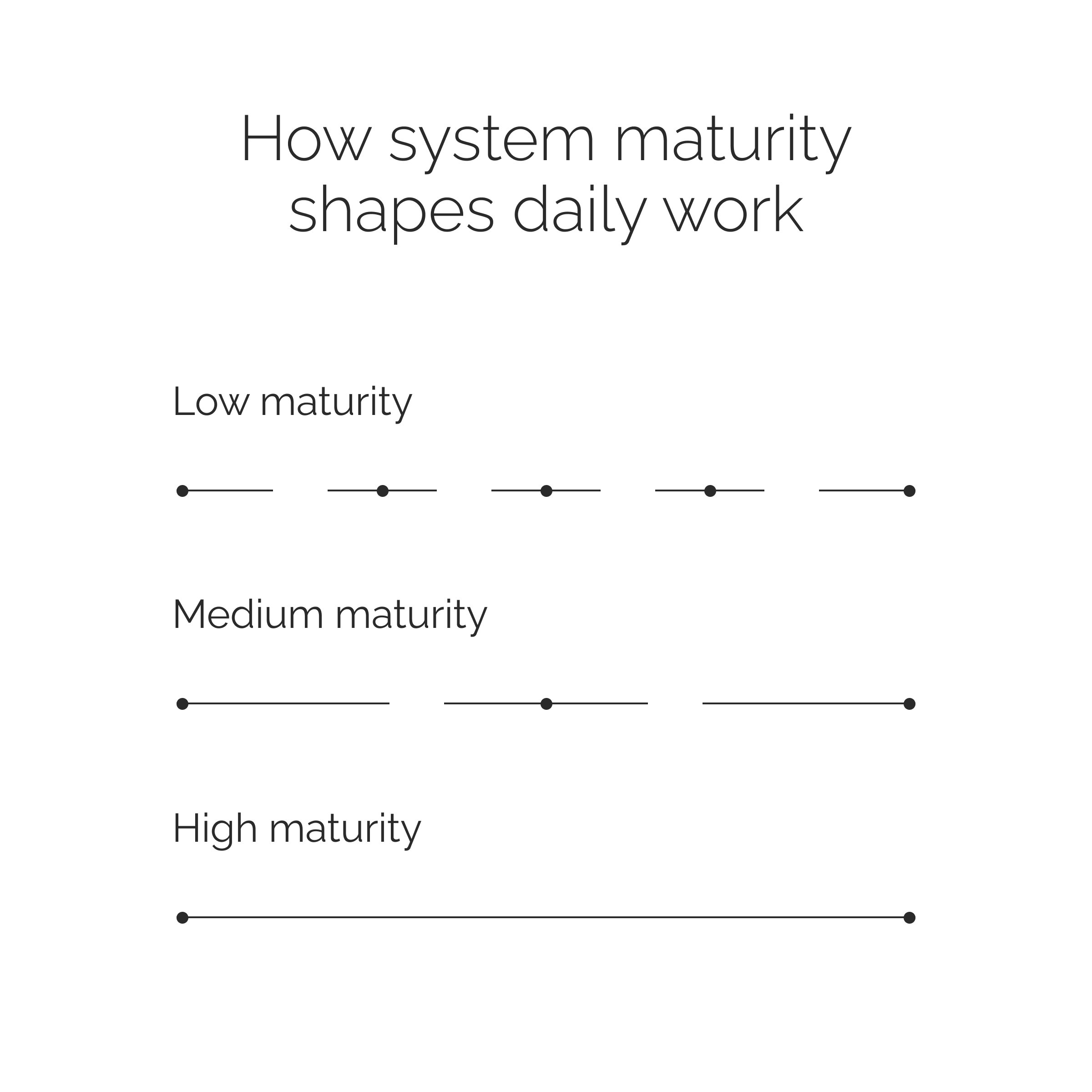
System maturity
Users ranging from experts to first-time system operators.
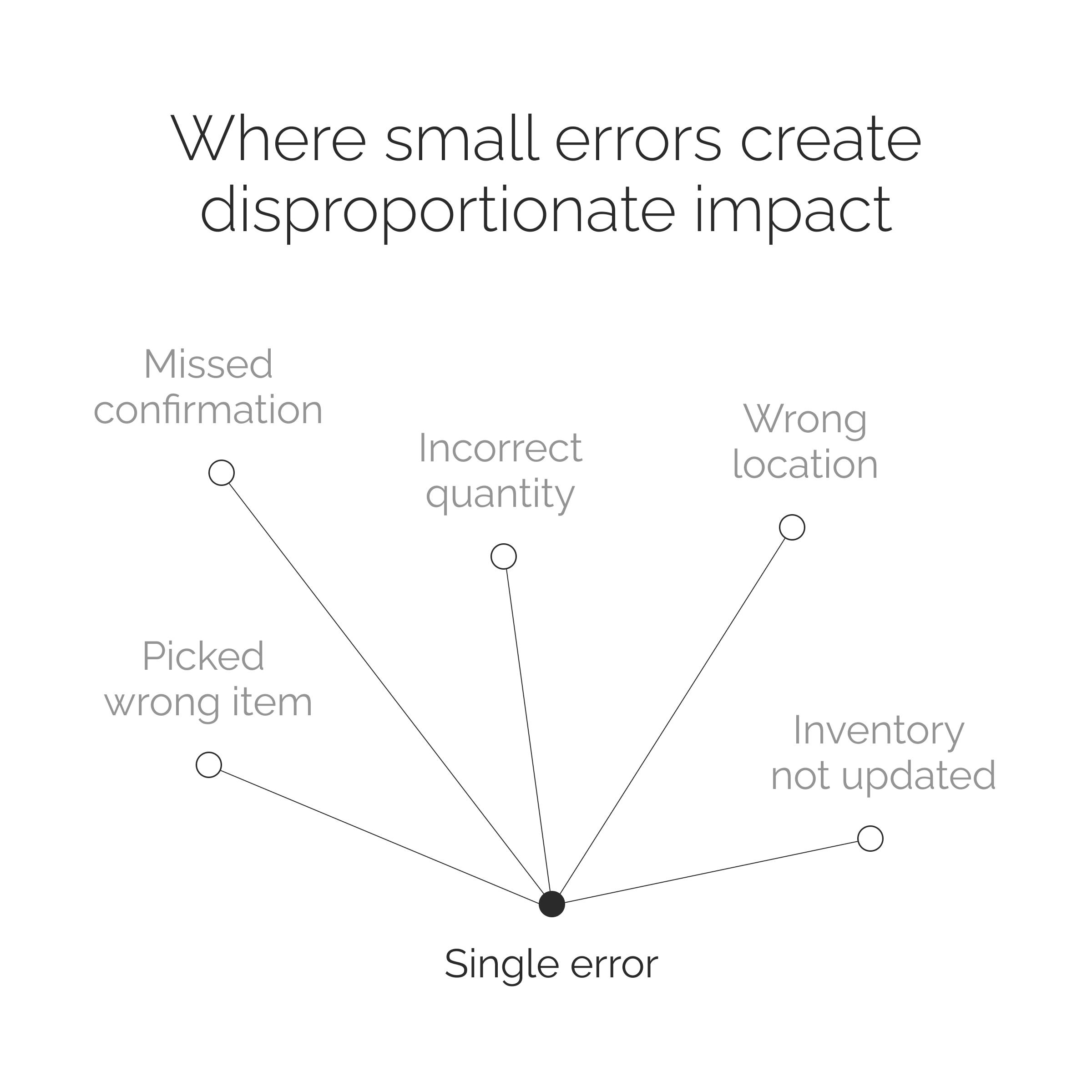
Risk
Errors creating direct operational and financial consequences.
04 Decision moment #2
Supporting expert efficiency while improving usability for less experienced users
Another decision addressed how to design for users with very different levels of experience within the same system. The platform was used daily by highly experienced operators who valued speed, as well as by newer or less frequent users who depended on clarity and guidance to work confidently. Experienced users relied on familiarity and shortcuts, while less experienced users struggled when interfaces assumed deep system knowledge. Optimizing purely for efficiency increased the risk of errors for newer users, while oversimplifying workflows threatened expert productivity. Design moved toward progressive usability. Core workflows remained efficient for expert users, while structure, feedback, and guidance were added where they reduced errors and cognitive load. This allowed the system to support learning over time without compromising operational efficiency or safety.
05 Decision moment #3
Prioritizing gradual improvement over large structural change
A further decision focused on whether to pursue large structural redesigns or improve the system within its existing foundations. Given the platform’s scale and critical role in daily operations, broader redesign efforts carried inherent risk. Research highlighted that major structural changes would likely disrupt established workflows, slow adoption, and make it harder for users to transfer existing knowledge. Many of the most impactful issues could instead be addressed by improving clarity, consistency, and feedback within current structures. The direction therefore favored targeted, evidence-led improvements. Design efforts concentrated on reducing friction and strengthening core patterns without destabilizing critical workflows, allowing the platform to evolve responsibly while continuing to operate at scale.
06 Design contributions
Translating decisions into scalable design solutions
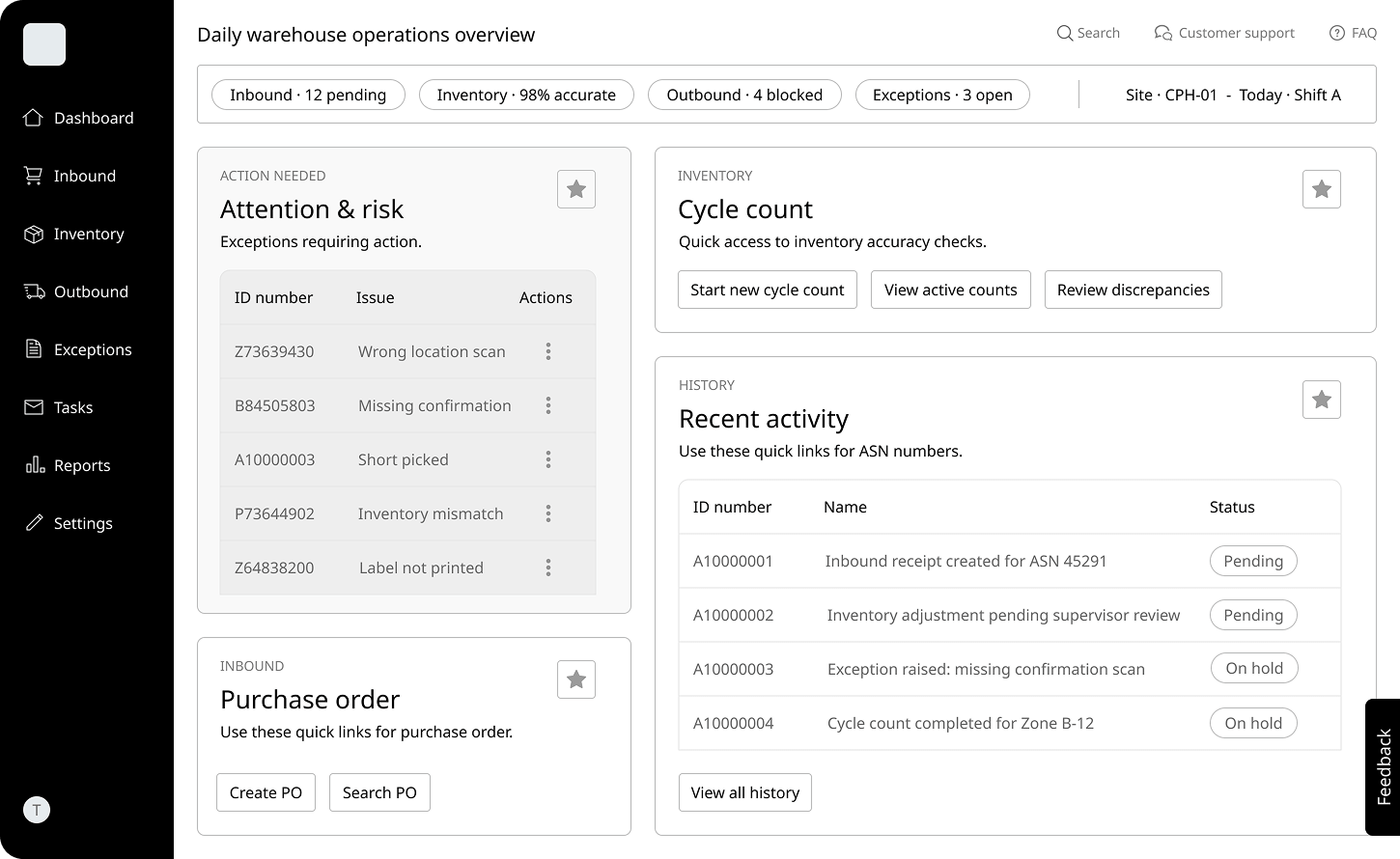
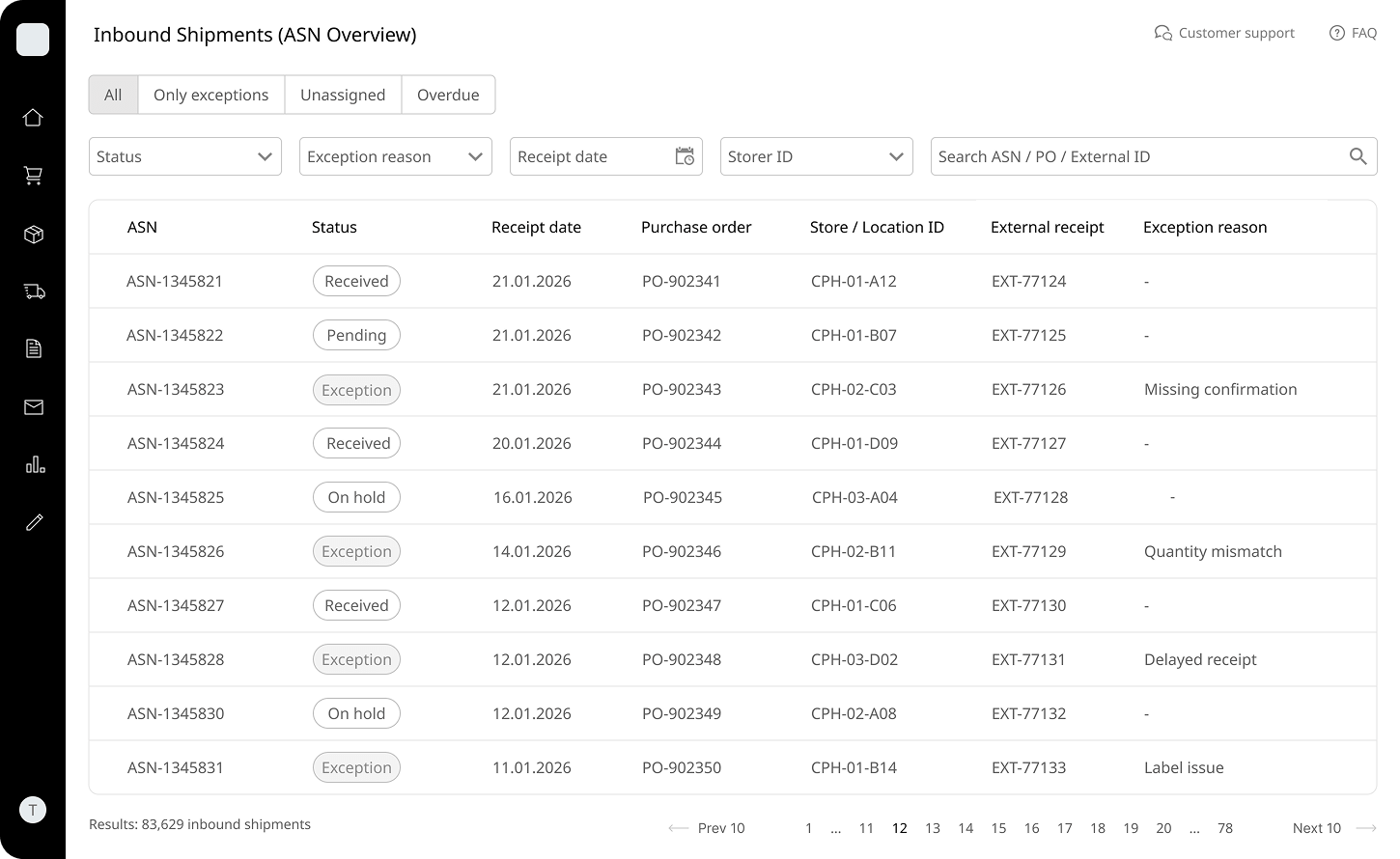
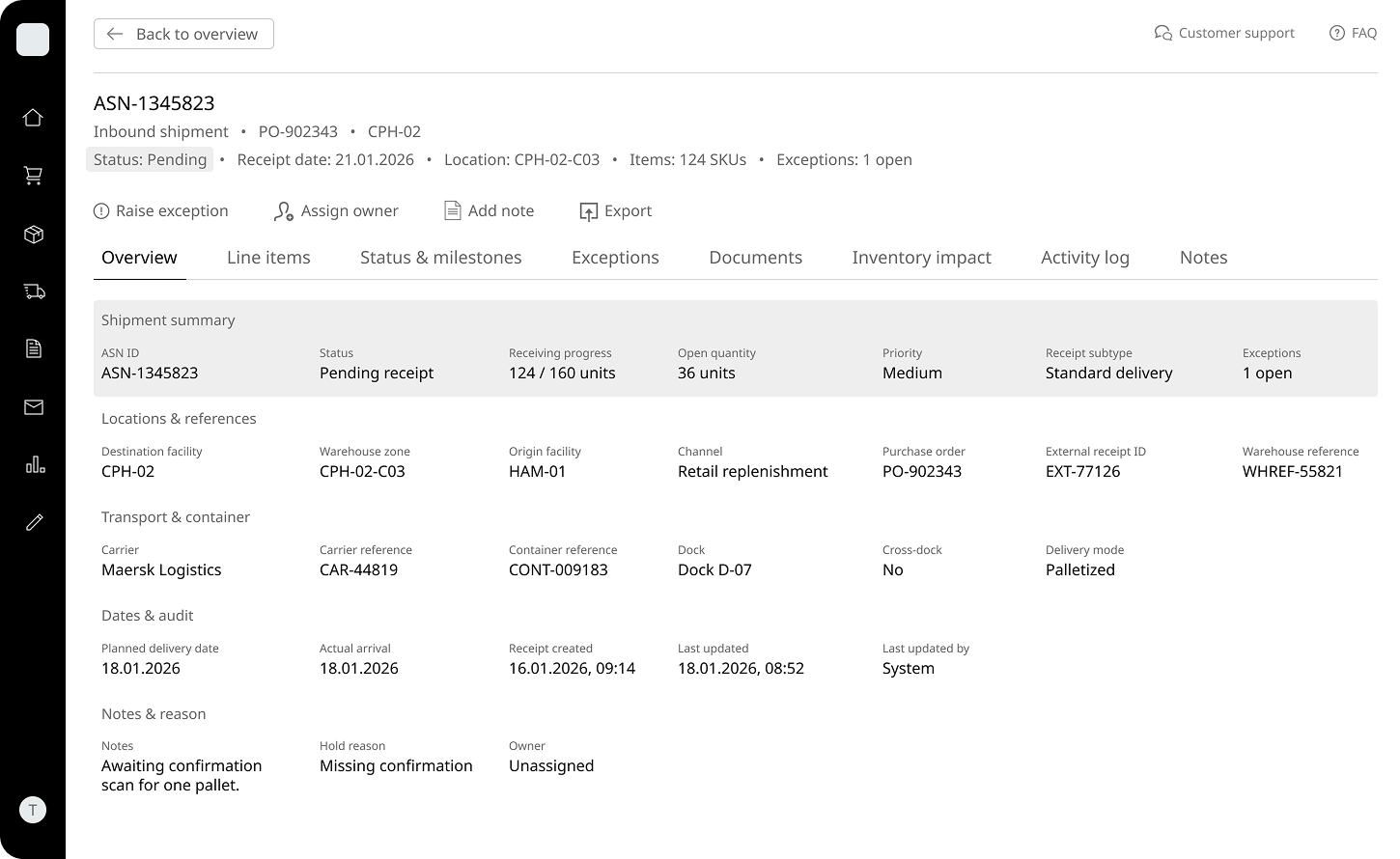
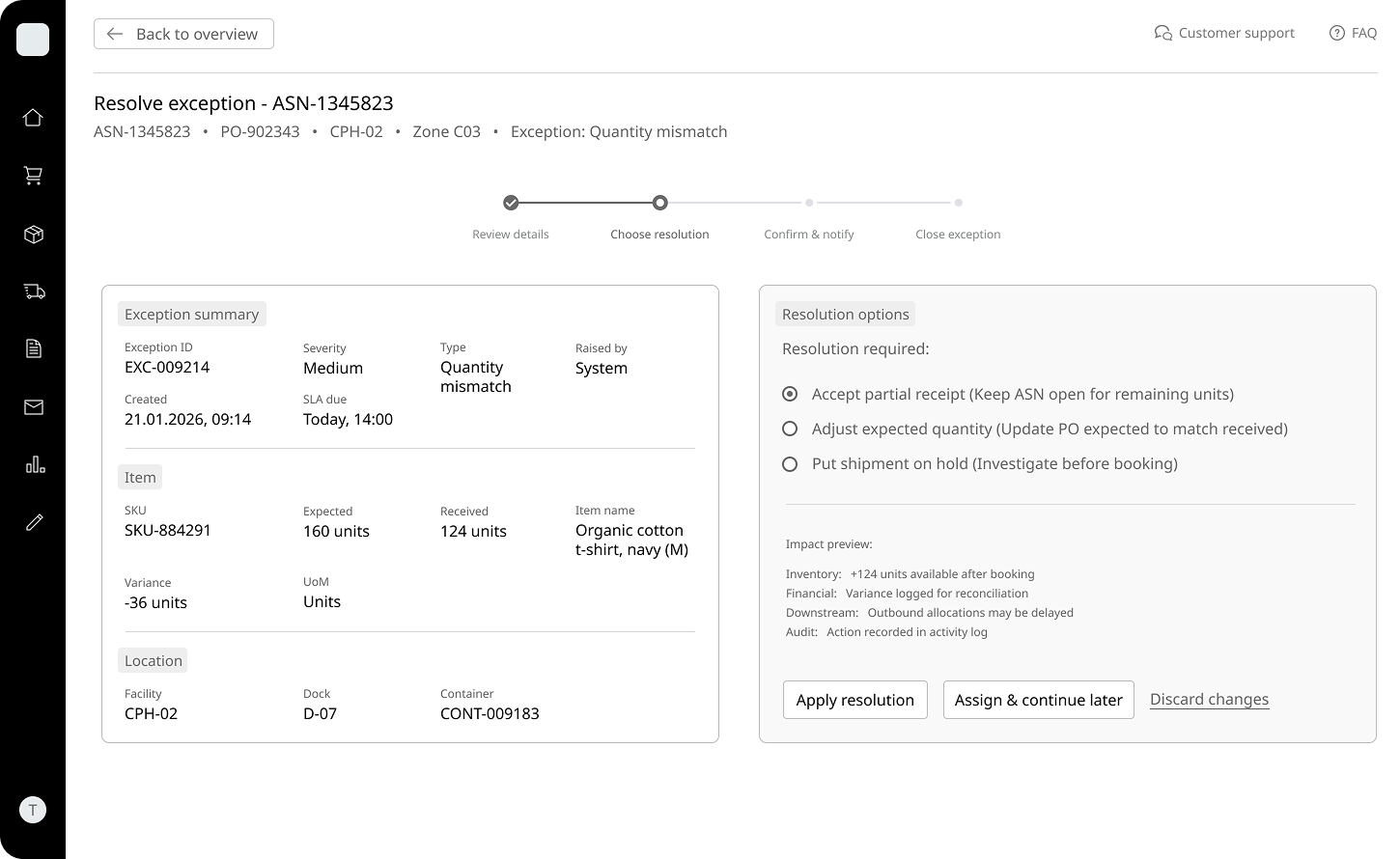
This work translated strategic decisions into scalable solutions within a live enterprise platform. Rather than treating the work as isolated feature design, the focus was on strengthening shared structures, interaction patterns, and clarity across key workflows. I delivered end-to-end UX and UI design work, from early concept exploration to validated, production-ready designs, including shaping interaction models, refining workflows, and developing abstract prototypes to test assumptions across operational contexts. Design solutions were validated through research and close collaboration with engineering and product partners, informing both shipped outcomes and future direction by clarifying trade-offs and risks before development. I worked closely with engineers to translate design intent into buildable behavior, clarifying states, edge cases, and system feedback to support reliable implementation.
07 Impact and recognition
Influencing direction and reducing risk at enterprise scale
The work helped clarify product direction within a complex, global platform by grounding decisions in shared evidence rather than assumptions. Research and design insights reframed priorities, surfaced cross-regional risks, and aligned product, engineering, and business teams in roadmap discussions. Design outcomes supported more confident decision-making in a live, business-critical environment. Some solutions were implemented and adopted within the platform, while others shaped future direction by clarifying trade-offs and constraints before development. The work was recognized through one SPOT Award and two STAR Awards, awarded to me based on peer nominations, reflecting individual contribution to enterprise UX and UI quality, cross-team alignment, and critical operational outcomes.
Outcomes
Recognition
1 SPOT Award and 2 STAR Awards for enterprise UX and UI impact, peer-nominated
Impact
Research and design outcomes informed priorities and roadmap decisions
Scale
Global platform used across regions, roles, and complex operational contexts worldwide
Adoption
Design solutions implemented and used within a live operational system
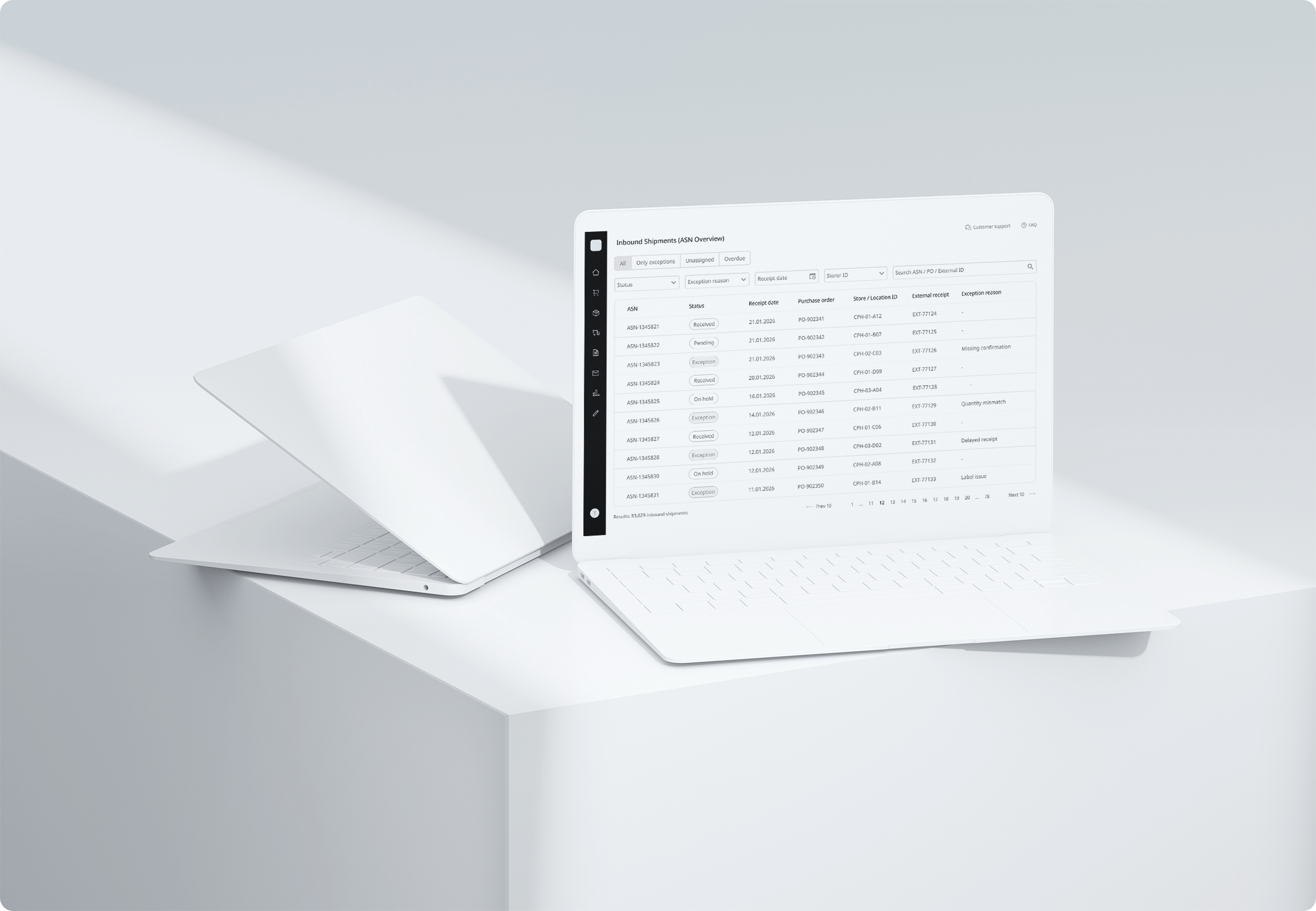
Due to confidentiality, visuals are presented in an abstracted and conceptual form, focusing on patterns and design intent rather than specific or production interfaces.
Explore more work
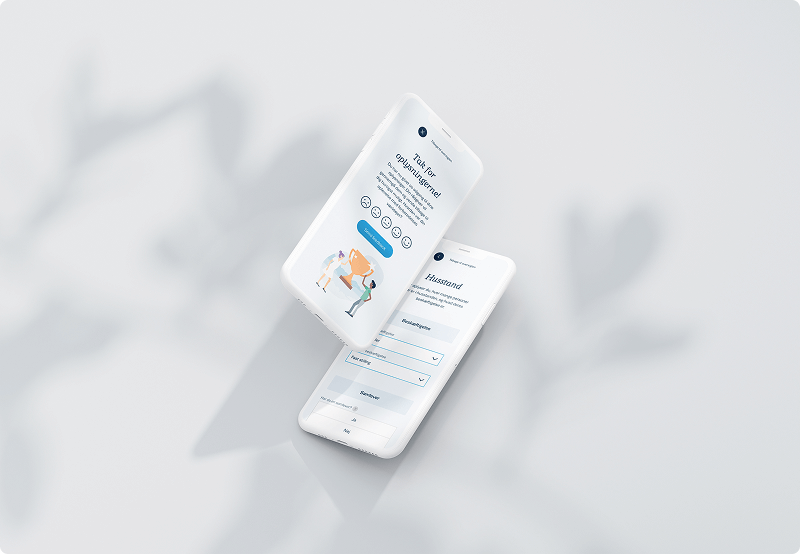
Danske Bank
Delivered a UX/UI redesign adopted across Denmark, raising customer ratings from 6.2 to 8.6 in five months.
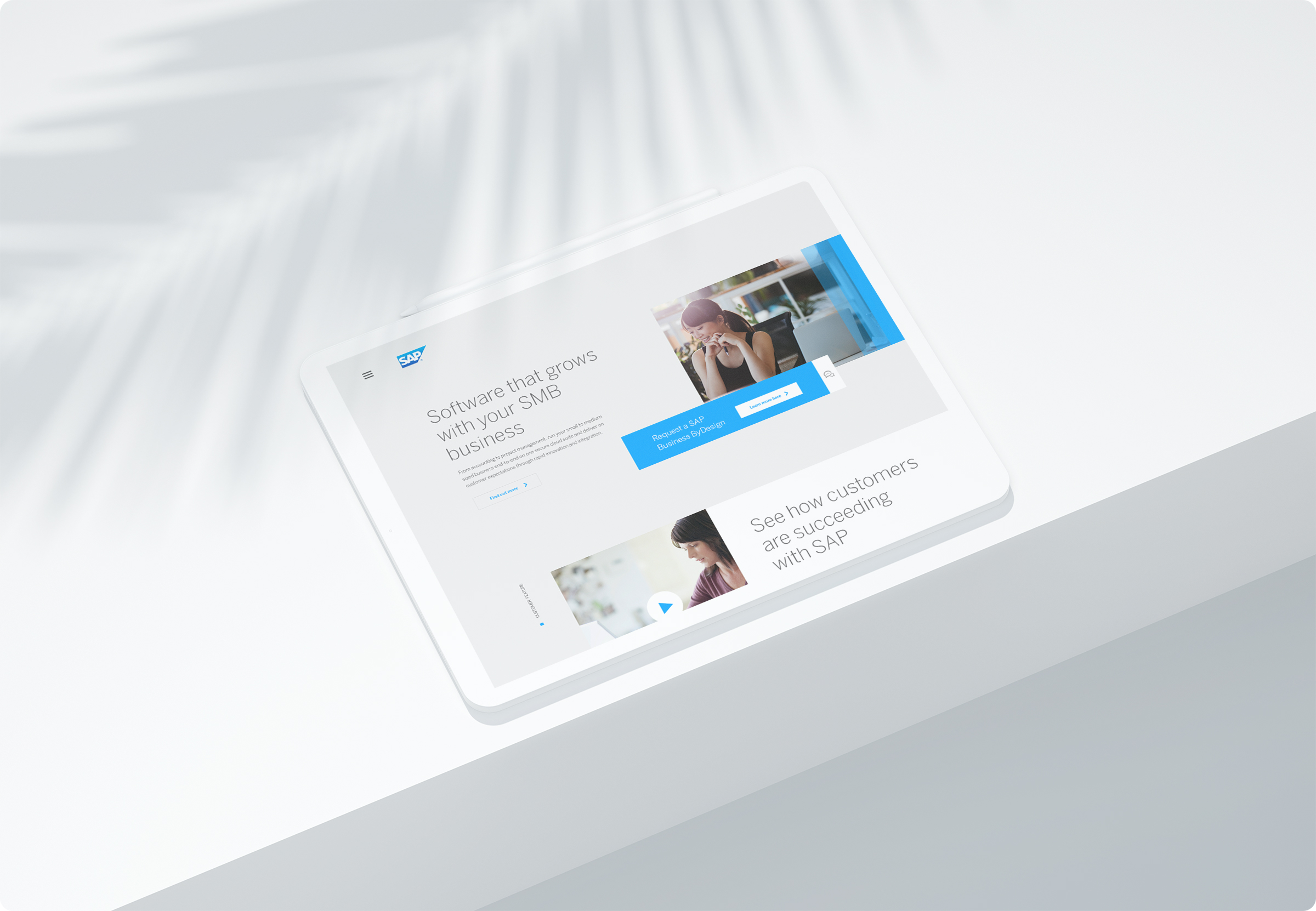
SAP
Designed a product site for SAP’s SMB market to clarify value, support sales conversations, and reduce decision friction.